


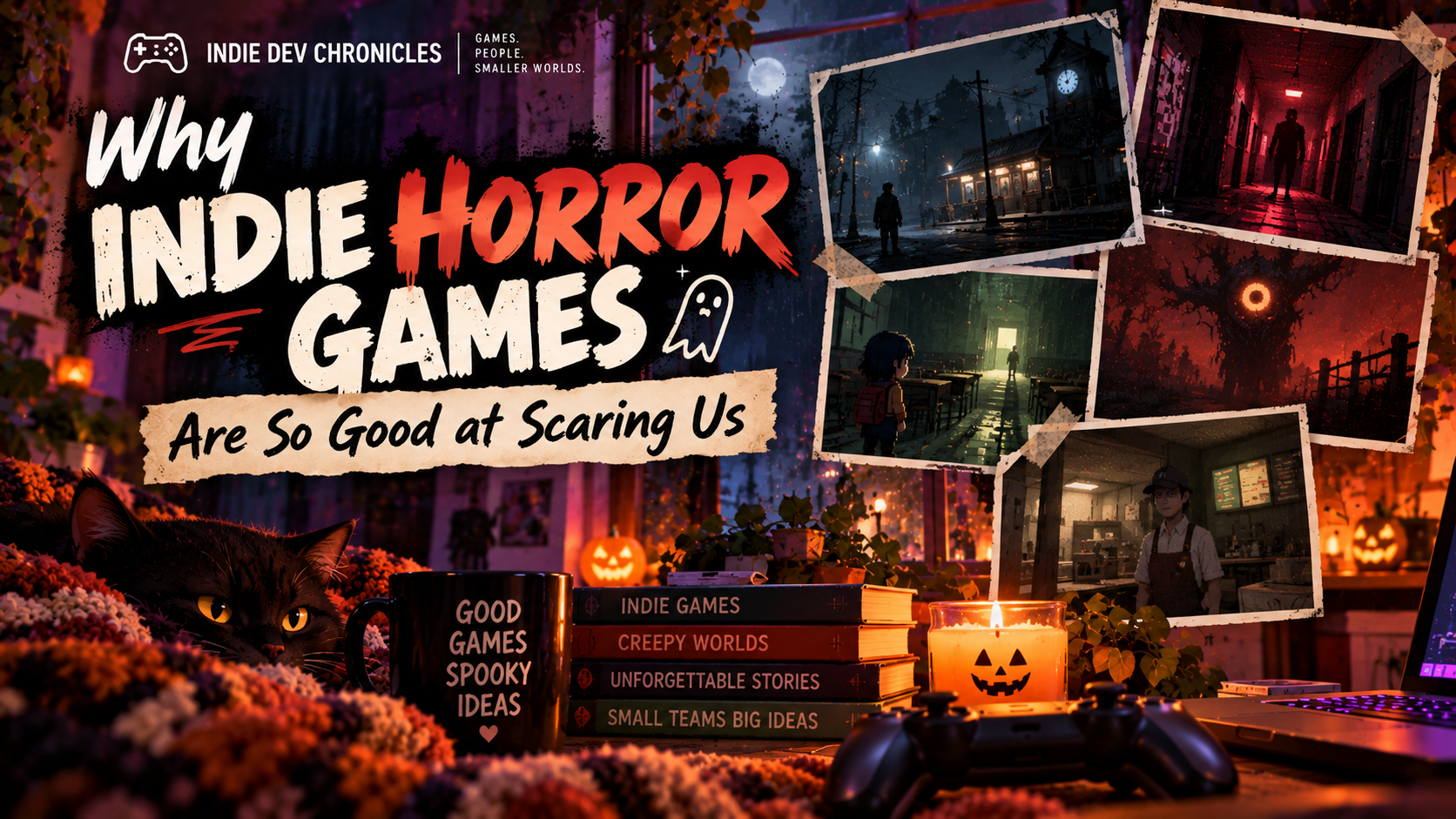
There’s something about indie horror games that just hits differently.
You can play a big-budget horror game with realistic graphics, expensive cutscenes, and monsters that look like they belong in your worst nightmare. And sure, it can be terrifying.
But then you load up a little indie game with pixelated graphics, a strange hallway, and barely any explanation of what’s happening.
Suddenly, you’re more uncomfortable than you were playing the game with a multimillion-dollar budget.
How does that happen?
The truth is, indie horror games have become incredibly good at making players uncomfortable without needing massive worlds or complicated gameplay systems.
Sometimes, the scariest thing a game can do is make you feel like something is wrong without telling you exactly what it is.
They Know How to Make You Feel Uncomfortable
Not every horror game needs a monster chasing you.
Sometimes all it takes is an empty room.
A flickering light.
A strange noise coming from somewhere you can’t see.
One of the biggest strengths of indie horror games is their ability to turn ordinary environments into places that feel threatening.
Take THRESHOLD, for example.
You’re working at an isolated train station, performing what initially seems like a routine job. But the more time you spend there, the more unsettling everything becomes.
The game doesn’t need to constantly throw enemies at you because the environment itself creates tension.
You start questioning things that would normally seem harmless.
And once a game gets you thinking that way, even opening a door can feel like a terrible decision.
Sometimes Less Really Is More
We’ve become used to horror games that look incredibly realistic.
Detailed character models, cinematic lighting, elaborate environments, and impressive animations can make a game feel almost like a movie.
But indie developers often take a completely different approach.
Instead of trying to make everything look real, they lean into unusual visual styles.
Low-resolution textures, grainy filters, fixed camera angles, and retro graphics can create an atmosphere that feels strangely unsettling.
Games like Murder House and Fears to Fathom show how effective these choices can be.
Part of the fear comes from what you can’t clearly see.
When a shadowy figure appears at the end of a hallway, your brain starts filling in the missing details.
And sometimes what you imagine is much worse than anything the game could actually show you.
That’s why indie horror games don’t necessarily need cutting-edge graphics to be terrifying.
They just need to know how to use what they have.
They Aren’t Afraid to Get Weird
One thing I love about the indie horror scene is how unpredictable it can be.
Big franchises often have expectations attached to them. Players know what certain games are supposed to look like, how they should play, and what kinds of scares they might deliver.
Smaller games have more room to experiment.
A horror game might revolve around answering phone calls, working a night shift, exploring an apartment building, or performing a seemingly harmless task.
That freedom has produced some incredibly unusual experiences.
Look Outside, for example, turns an ordinary apartment building into a disturbing survival horror RPG where looking out the window can have horrifying consequences.
Meanwhile, Who’s Lila? uses facial expressions as a central gameplay mechanic, asking players to physically manipulate a character’s face during conversations.
Neither game follows the traditional formula of running through dark hallways while fighting monsters.
And that’s exactly why they stand out.
Some of the most memorable indie horror games are the ones that make you wonder how someone even came up with the idea.
Sound Can Be Scarier Than What You See
Picture this.
You’re walking through a dark building.
Nothing is moving.
There’s no music.
Then you hear footsteps.
You stop.
The footsteps stop.
Now you’re wondering whether you really heard something or whether your imagination is getting the better of you.
That’s the power of sound design.
Indie developers can create incredible tension using simple audio cues, uncomfortable silence, distant noises, and sounds that don’t seem to belong.
And when a game doesn’t constantly fill every moment with music, those little noises become even more noticeable.
You start listening more carefully.
You hesitate before moving.
You might even turn around just to make sure nothing is following you.
The best horror experiences understand that what you hear can be just as frightening as what you see.
Sometimes, it’s worse.
They Make Ordinary Situations Terrifying
Some of the scariest horror games don’t take place in haunted mansions or abandoned hospitals.
They happen somewhere familiar.
A convenience store.
A family home.
An apartment.
A school.
These settings work because we recognize them.
A game like The Closing Shift takes the ordinary experience of working at a coffee shop and slowly turns it into something deeply uncomfortable.
Instead of fighting supernatural creatures, you’re dealing with the growing feeling that something isn’t right.
That kind of horror can feel surprisingly personal.
It’s one thing to be scared while exploring a fictional castle filled with monsters.
It’s another to feel uneasy about walking to your car after a late shift.
Indie horror games are particularly effective at finding fear in situations that don’t initially seem frightening.
And once a game makes something familiar feel unsafe, that feeling can stay with you long after you’ve stopped playing.
Shorter Games Can Leave a Bigger Impression
Not every horror game needs to last 20 hours.
In fact, some experiences are more effective because they’re short.
A smaller game can introduce an unsettling idea, build tension around it, and reach its conclusion before the concept starts to feel repetitive.
There’s less time to become comfortable.
Less time to figure out every trick.
And sometimes, less time to fully understand what just happened.
Games like Iron Lung demonstrate how a relatively simple concept can create an incredibly memorable experience.
You’re trapped inside a tiny submarine, navigating an ocean of blood with limited visibility.
The premise is bizarre, but the confined environment and uncertainty do most of the work.
You don’t need dozens of monsters or a complicated combat system.
You just need a reason to feel trapped.
For players who enjoy horror but don’t necessarily want to commit to a lengthy game, shorter indie experiences can be especially appealing.
Indie Horror Keeps Finding New Ways to Scare Us
The best part about indie horror is that there isn’t one correct way to make it work.
Some games rely on psychological tension.
Others use disturbing visuals, strange storytelling, or the fear of being completely helpless.
Some are terrifying because of what they show you.
Others are terrifying because of what they refuse to explain.
And that variety is what keeps the genre interesting.
As more developers experiment with unusual concepts, indie horror games continue to prove that creating fear isn’t necessarily about having the biggest budget.
It’s about understanding what makes players uncomfortable and finding creative ways to use that feeling.
With Halloween approaching, now is a perfect time to explore some of those experiences.
If you’re looking for somewhere to start, check out our 7 Underrated Indie Horror Games Worth Playing This Halloween article for a few titles that deserve more attention.
You can also explore our Hidden Gems section for more indie games that might have slipped under your radar.
What indie horror game has scared you the most? Was it a jump scare, an unsettling atmosphere, or something you still can’t quite explain?
Let us know in the comments.
