


Ever dreamed of become indie game developer, where every character, mechanic, and storyline is exactly how you envisioned it? That’s the appeal of indie game development—total creative control. Unlike working for a big studio, indie developers make their own decisions, build unique games, and sometimes even strike gold with a breakout hit.
But going indie isn’t just about creativity. It’s also about risk. Without a steady paycheck or a big marketing budget, many indie developers struggle to fund their projects, gain visibility, and turn a profit. The competition is fierce, with thousands of games released each year, making it harder than ever to stand out.
So, is indie game development the right path for you? This article breaks down the pros, challenges, skills, and market trends to help you decide whether taking the indie route is worth it—or if it’s just a dream best left on paper.
What is an Indie Game Developer?
An indie game developer is someone who creates video games without the backing of a major publisher. Unlike AAA developers working in large teams with multimillion-dollar budgets, indie developers operate on a smaller scale. They often self-fund their projects or rely on crowdfunding, grants, or indie-friendly publishers to bring their ideas to life.
Indie developers take different paths. Some work solo, handling everything from coding to art and marketing. Others form small teams, where responsibilities are split among designers, programmers, and artists. There’s also the option to work with indie publishers—companies that provide funding and marketing support without the creative restrictions of big publishers.
While indie development offers creative freedom, it also comes with significant challenges. Without corporate resources, indie developers must juggle multiple roles, manage tight budgets, and find ways to get their games noticed in an increasingly crowded market.

The Pros of Being an Indie Game Developer
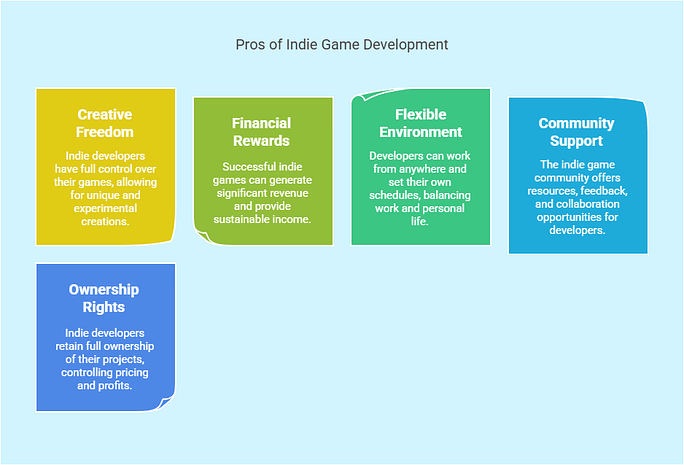
Creative Freedom
Indie developers have full control over their games. There are no executives demanding changes to fit market trends—every creative decision, from game mechanics to storytelling, is theirs to make. This freedom allows for unique and experimental games that might never exist in the AAA space.
Potential Financial Rewards
Indie games can be profitable. Hits like Hollow Knight, Stardew Valley, and Hades started as indie projects and generated millions in revenue. Digital distribution platforms like Steam, itch.io, and the Nintendo eShop give indie developers direct access to a global audience. While not every indie game becomes a blockbuster, a well-made and well-marketed game can provide a sustainable income.
Flexible Work Environment
Indie developers can work from anywhere—home, a shared studio, or even while traveling. There’s no fixed schedule or office politics. Developers set their own pace, balancing work with personal life in a way that suits them.
Community Support
The indie game dev community is strong. Developers share resources, provide feedback, and collaborate through online forums, Discord groups, and game jams. Crowdfunding platforms like Kickstarter and Patreon allow indie developers to secure funding directly from fans, creating a built-in audience before a game even launches.
Ownership and Rights
AAA developers rarely own the games they work on, but indie developers retain full ownership of their projects. This means they control pricing, distribution, and future updates. They also keep a larger share of profits, making indie development a viable business for those who succeed.
The Challenges and Risks
Financial Uncertainty
Unlike traditional game development jobs, indie game developers don’t have a guaranteed paycheck. Many fund their projects out of pocket or rely on savings, part-time work, or freelance gigs to stay afloat. While some secure crowdfunding, grants, or early access sales, success is never guaranteed. A game that takes years to develop might not generate enough revenue to cover costs, making financial planning essential.
High Competition
The indie game market is more crowded than ever. Platforms like Steam, the App Store, and itch.io see thousands of new releases each year, making it difficult for any single game to stand out. Even well-made games can struggle for attention, especially when competing against established indie hits and big-budget AAA titles. Without strong marketing and a unique selling point, an indie game risks being overlooked.
Skill Demands
Indie developers often work with limited resources, meaning they must take on multiple roles. A solo developer might need to code, create art, design levels, write music, and handle business tasks—all at once. Even in small teams, responsibilities are spread thin. While outsourcing is an option, it adds to development costs and requires careful coordination.
Marketing and Visibility
Making a great game isn’t enough—it needs to reach players. Without the marketing budgets of AAA studios, indie developers must rely on social media, community engagement, and word-of-mouth. Platforms like Twitter, Reddit, and Discord can help, but building an audience takes time. Press coverage and influencer support are crucial, yet difficult to secure without an established brand or network.
Mental and Emotional Strain
Developing a game is a long, exhausting process. Many indie developers face burnout from working long hours with little immediate reward. Self-doubt is common, especially when progress is slow or feedback is harsh. The uncertainty of success adds stress, making emotional resilience just as important as technical skills.
Skills Needed to Succeed as an Indie Game Developer
Programming
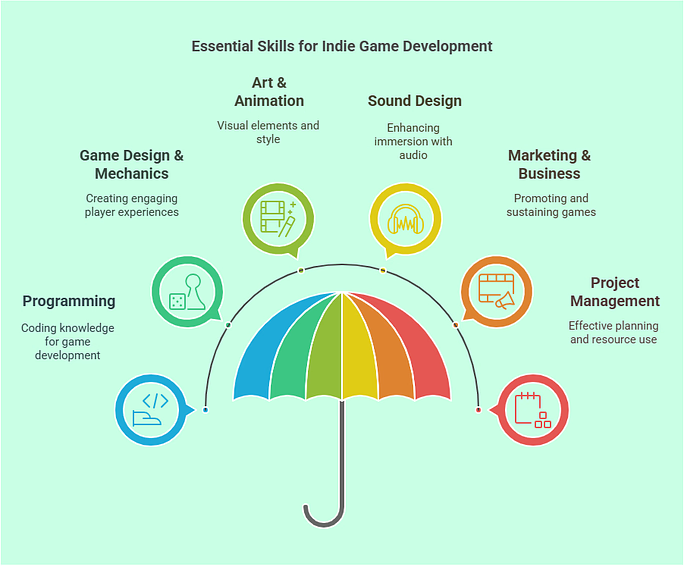
Most indie games require coding knowledge. Unity (C#) and Unreal Engine (Blueprints, C++) are the most popular engines, offering flexibility for different types of games. For 2D projects, engines like Godot (GDScript) and GameMaker are beginner-friendly alternatives. Even if a developer isn’t a programmer, understanding basic scripting helps with debugging and communicating with collaborators.
Game Design & Mechanics
A good game isn’t just about graphics or story—it needs engaging mechanics. Successful indie developers understand player behavior, balance difficulty, and create intuitive user experiences. Playtesting is essential to refine mechanics and eliminate frustrating elements. Game design knowledge can come from experience, studying successful titles, or formal courses.
Art & Animation
Visuals help a game stand out, whether it’s pixel art, hand-drawn animation, or 3D models. Many indie developers learn basic art skills to prototype ideas before outsourcing professional assets. Free and affordable tools like Aseprite (2D pixel art) and Blender (3D modeling) make it easier to develop in-house.
Sound Design
Music and sound effects shape the player’s experience. A well-composed soundtrack can make a game memorable, while good sound design enhances immersion. Free resources like Freesound and paid assets from marketplaces like Unity Asset Store help those without musical expertise. Some developers use tools like FMOD or Wwise to create dynamic audio.
Marketing & Business
A great game won’t succeed without an audience. Developers need to promote their games through social media, devlogs, and platforms like Steam and itch.io. Understanding pricing models, crowdfunding, and post-launch support helps sustain a game’s success.
Project Management
With limited time and resources, indie developers must plan effectively. Using tools like Trello, Notion, or Jira helps track progress, manage deadlines, and avoid burnout. Sticking to a realistic scope prevents projects from becoming overwhelming.
Costs and Funding Options
Self-Funding
Many indie developers start by funding their projects with personal savings. This approach gives full creative control but comes with financial risk. Developers often work part-time or freelance to support themselves during development. Keeping costs low by using free tools, asset packs, and open-source software can help stretch a budget.
Crowdfunding
Platforms like Kickstarter and Indiegogo allow developers to secure funding from future players. A strong pitch, an engaging demo, and an active community are key to running a successful campaign. Patreon is another option, offering ongoing financial support in exchange for exclusive content or early access. However, crowdfunding isn’t guaranteed—many campaigns fail due to lack of exposure or unrealistic goals.
Grants & Competitions
Various organizations provide funding through grants and game development contests. Programs like the Epic MegaGrants and Humble Bundle’s Black Game Developer Fund offer financial support without requiring repayment. Winning competitions can also provide prize money, exposure, and networking opportunities.
Early Access & Pre-orders
Platforms like Steam Early Access let developers sell unfinished games to fund development while gathering player feedback. Pre-orders can also generate revenue before launch. However, releasing too early can harm a game’s reputation if it feels incomplete.
Publisher Support
Some indie-friendly publishers, like Devolver Digital and Annapurna Interactive, offer funding, marketing, and distribution while allowing developers to retain creative control. However, signing with a publisher often means sharing profits and meeting certain milestones.
The Market and Trends in 2025
Rise of Solo Developers
With more accessible game engines, AI-assisted development tools, and online resources, solo developers are thriving. Many successful games, like Undertale and Papers, Please, were created by single developers, proving that large teams aren’t always necessary.
Niche Games Thriving
Indie games that cater to specific audiences are finding success. Cozy games like Dredge and Dave the Diver have shown that smaller, well-defined experiences can outperform generic titles. Developers focusing on unique mechanics, strong storytelling, or underrepresented themes have a better chance of standing out.
Subscription Services
Xbox Game Pass, PlayStation Plus, and other gaming subscription services are changing how indie games reach players. Being featured in a subscription library provides exposure and financial stability through licensing deals. However, long-term success still depends on post-subscription sales.
AI in Game Development
AI tools are streamlining development, helping with procedural generation, NPC behavior, and asset creation. AI-driven animation and voice synthesis reduce costs, allowing smaller teams to achieve higher production quality. However, over-reliance on AI risks making games feel generic if not used creatively.
Mobile & Cross-Platform Growth
Indie developers are increasingly targeting mobile platforms alongside PC and console. With cloud gaming and improved controller support, more indie games are launching across multiple devices, reaching wider audiences. Cross-platform play is also becoming a key feature, helping indie games stay competitive in a crowded market.
How to Get Started as an Indie Game Developer
Choose an Engine
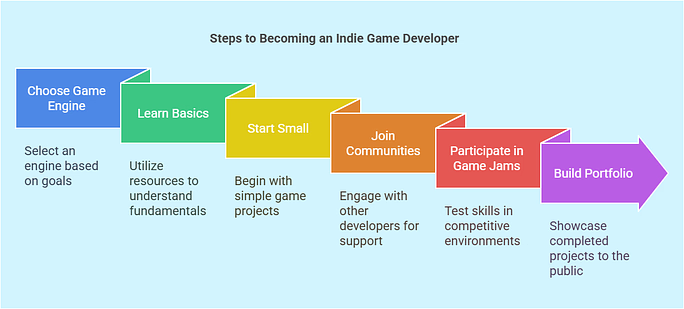
Selecting the right game engine depends on your goals. Unity (C#) is beginner-friendly, widely used, and great for both 2D and 3D games. Unreal Engine (C++/Blueprints) offers high-end graphics, making it ideal for 3D games but with a steeper learning curve. Godot (GDScript) is a lightweight, open-source option gaining popularity for its flexibility and free licensing.
Learn the Basics
Plenty of free resources exist to learn game development. Websites like Coursera, Udemy, and YouTube channels like Brackeys and Game Maker’s Toolkit offer tutorials for all skill levels. Many game engines also have official documentation and beginner-friendly guides.
Start Small
Many beginners make the mistake of diving into a massive project too soon. Start with a simple game—like a basic platformer or puzzle game—to learn essential mechanics before moving on to more ambitious ideas.
Join Communities
Networking with other indie developers can provide valuable feedback, support, and motivation. Communities on Reddit (r/gamedev), Discord servers, and forums like TIGSource help developers learn, share experiences, and collaborate.
Game Jams
Participating in game jams like Ludum Dare or GMTK Game Jam is a great way to practice rapid development, experiment with ideas, and build a portfolio. These short competitions help developers refine their skills and learn to work within deadlines.
Build a Portfolio
A strong portfolio helps showcase your skills to potential players, publishers, or collaborators. Platforms like Itch.io, GameJolt, and Steam are great places to share completed projects and get feedback from real players.
Conclusion: Is It the Right Choice for You?
Indie game development offers creative freedom, flexible work, and the potential for financial success, but it also comes with challenges like financial risk, competition, and burnout. Success requires persistence, adaptability, and a willingness to learn multiple skills.
If you’re passionate about making games, start small, experiment with ideas, and engage with the indie community. Not every indie developer finds immediate success, but those who stick with it, refine their craft, and learn from failures have the best chance of turning their passion into a sustainable career.
