


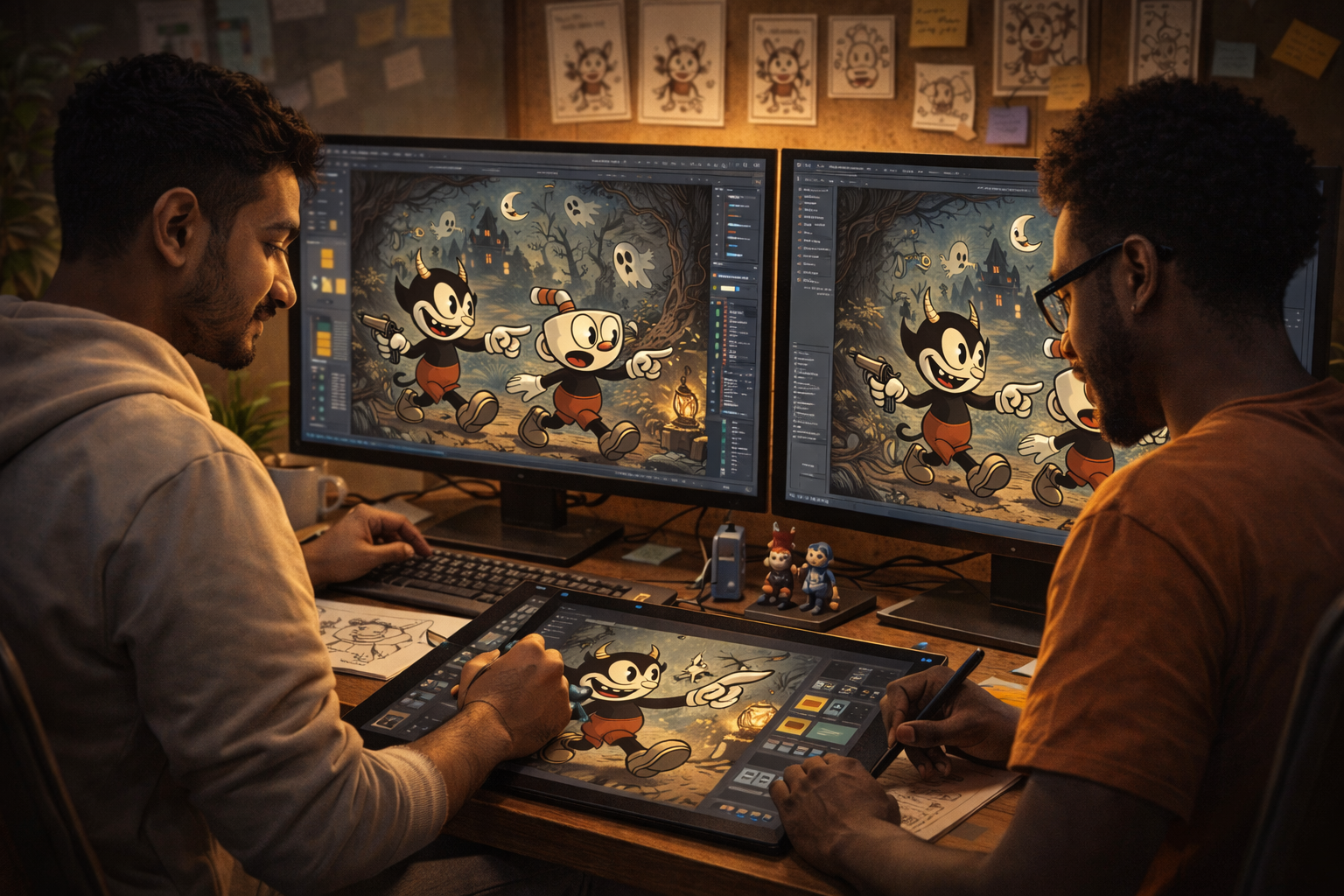
In 2026, indie games are looking backward to move forward. Across storefronts, showcases, and trailers, a familiar visual style keeps reappearing: exaggerated movement, elastic characters, hand-drawn lines, and surreal environments inspired by 1930s rubber hose animation.
Often referred to by players as the rubber house or rubber hose revival, this visual approach has become one of indie gaming’s most recognizable art trends. What once belonged to early cartoons is now shaping the future of interactive design.
This isn’t nostalgia for nostalgia’s sake. Instead, it’s a creative response to modern development realities—and a powerful way for indie developers to stand out.
What Is the Rubber House Style?
The rubber house style draws from early animation techniques popular in the 1930s. Characters move with flexible limbs, expressive faces, and exaggerated motion. Backgrounds often feel alive, bending and reacting as if they share the same energy as the characters.
Key traits include:
- Hand-drawn, sketch-like linework
- Elastic animation with exaggerated squash and stretch
- Simplified shapes with high personality
- Surreal, sometimes unsettling environments
- A playful mix of charm and unease
In games, this style feels animated rather than rendered. Everything moves with intention.
Why 1930s Animation Is Everywhere in 2026
Several factors are driving this visual resurgence.
First, It Instantly Stands Out
In a crowded indie market, visual identity matters. While pixel art and low-poly styles remain popular, rubber hose animation feels fresh by comparison.
Because it is rare in games, players recognize it immediately. That recognition helps trailers stand out and makes screenshots memorable.
Second, It Fits Indie Budgets
Photorealism is expensive. Stylized animation is not.
Rubber hose visuals rely more on animation skill than technical power. As a result, small teams can achieve striking results without massive art pipelines. This makes the style ideal for indie studios working with limited resources.
Third, Animation Has Become the Message
In 2026, animation is no longer just visual flair. It communicates tone, emotion, and world logic.
Rubber house animation allows developers to:
- Convey emotion through motion
- Replace realism with personality
- Create worlds that feel expressive rather than static
Because of this, movement itself becomes part of the storytelling.
Why Indie Games Are Leading This Trend
Indie developers have always embraced artistic risk. The rubber house renaissance fits naturally into that mindset.
Unlike large studios, indie teams can experiment without worrying about mass appeal. They can lean into strange visuals, unsettling moods, or exaggerated motion that would feel risky in AAA titles.
As a result, many indie games in 2026 use this style to:
- Reinforce surreal or dreamlike themes
- Blur the line between cartoon and horror
- Create memorable characters without realism
This freedom is what allows the style to flourish.
The Emotional Power of Rubber House Animation
While the style looks playful on the surface, it often carries deeper emotional weight.
Because characters are exaggerated, their emotions read clearly. Joy, fear, tension, and confusion all feel amplified. That clarity helps players connect emotionally, even when worlds are strange or abstract.
At the same time, the style can feel unsettling. Smiling characters that move unnaturally or environments that bend in impossible ways create tension without realism.
This balance between charm and discomfort is one reason the trend resonates so strongly in 2026.
How the Rubber House Style Shapes Gameplay
This visual trend does more than affect aesthetics. It also influences how games play.
Movement Feels More Expressive
Characters often bounce, stretch, and recoil in ways that make movement feel alive. As a result, even simple actions feel satisfying.
Worlds Feel Reactive
Environments in rubber house-style games often respond to the player. Walls pulse. Objects wobble. Spaces feel organic instead of rigid.
Rules Feel Flexible
Because the visuals reject realism, players accept unusual mechanics more easily. The world teaches players that anything can happen.
This makes the style especially effective for experimental or genre-blending games.
Why This Trend Is Peaking in 2026
The rubber house renaissance didn’t happen overnight. It built momentum over several years.
By 2026:
- Players are more open to stylized visuals
- Indie audiences actively seek unique art styles
- Animation tools are more accessible
- Social media favors instantly recognizable visuals
Together, these factors created the perfect moment for 1930s animation to return in a modern form.
Is This Just a Passing Trend?
While visual trends come and go, the rubber house revival feels more like a shift than a fad.
It represents a move away from realism and toward expression. As long as indie developers value personality over polish, this style will remain relevant.
Even if it evolves, its influence on animation-driven game design is likely to last.
Conclusion: Old Animation, New Creative Energy
The rubber house renaissance shows how far indie gaming has come. By pulling inspiration from 1930s animation, modern developers are creating games that feel expressive, memorable, and emotionally distinct.
In 2026, this style is more than a visual choice. It’s a statement.
Indie games don’t need realism to feel alive.
Sometimes, all they need is motion, personality, and a little bend in the rules.
