


For years, exploration in games followed familiar patterns. Players clicked through dialogue, followed quest markers, or uncovered maps one waypoint at a time. While effective, these systems often guided players too directly, leaving little room for true discovery.
In 2026, that model is changing.
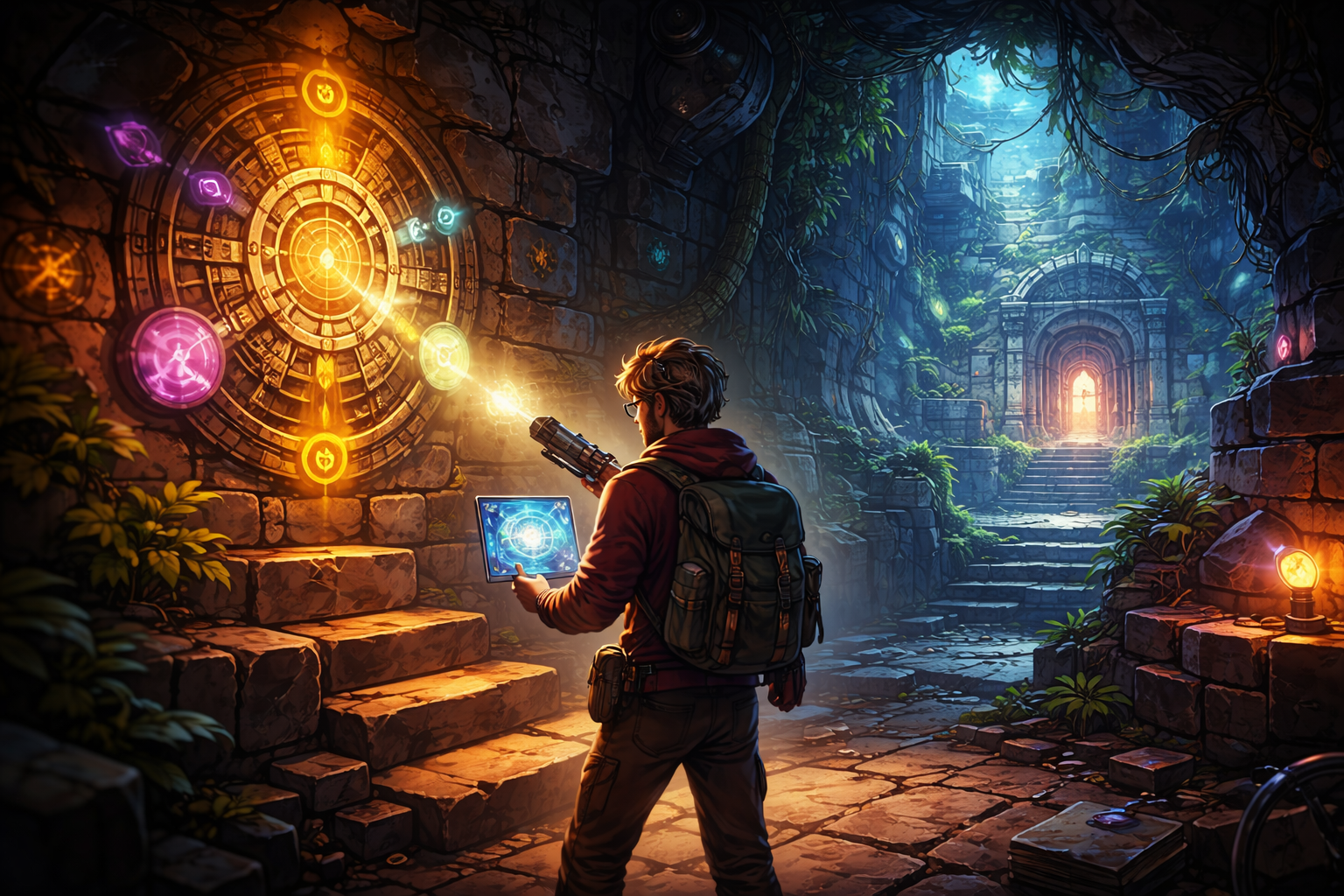
A growing design philosophy known as the metroidbrainia is reshaping how players explore game worlds. Instead of relying on items, icons, or explicit instructions, these games ask players to learn, observe, and think their way forward. Progress comes not from clicking the right object, but from understanding how the world works.
As a result, exploration is becoming more intentional, immersive, and rewarding.
What Is a Metroidbrainia?
The term metroidbrainia blends two familiar ideas:
- Metroidvania design, which emphasizes backtracking and world mastery
- Brain-driven progression, where knowledge replaces items as the primary unlock
In a metroidbrainia, players advance by learning rules, patterns, and relationships. Once you understand a system, the world opens up. Nothing changes in your inventory, but everything changes in your mind.
Because of this, progress feels earned rather than handed out.
Why Point-and-Click Exploration Is Losing Its Grip
Traditional point-and-click and marker-based exploration relies heavily on external guidance. Icons tell you where to go. Highlights reveal what matters. Dialogue spells out the solution.
However, these systems can weaken discovery.
When the game explains everything, players stop asking questions. Exploration becomes mechanical instead of curious. In contrast, metroidbrainias remove most of those aids.
Instead of asking “Where should I click?”, players ask:
- What does this environment allow?
- What rules am I missing?
- Why didn’t this work before, but works now?
That shift is powerful.
Why Metroidbrainias Are Thriving in 2026
Several trends are pushing this design forward.
Players Want Meaningful Discovery
Modern players are increasingly drawn to games that respect their intelligence. Rather than being told what to do, they want to figure things out on their own.
Metroidbrainias reward attention, patience, and experimentation. Because of that, every discovery feels personal.
Indie Developers Are Leading the Movement
Indie studios are especially well-suited to this style. Without the pressure of mass-market accessibility, they can take creative risks and trust players to engage deeply.
As a result, many indie games in 2026 are built around subtle systems instead of tutorials.
Knowledge-Based Progression Scales Well
Unlike item-based progression, knowledge scales naturally. A single mechanic can unlock dozens of paths once understood.
Because of this, small teams can create dense worlds without massive content budgets.
How Metroidbrainias Change Exploration Design
Metroidbrainias don’t just remove markers. They rethink exploration from the ground up.
Worlds Are Designed Around Rules
Every area teaches something, even if it isn’t obvious at first. Environmental clues replace instructions. Patterns replace prompts.
Once players grasp those rules, exploration accelerates naturally.
Backtracking Feels Purposeful
Returning to earlier areas is no longer about finding a missing item. Instead, it’s about seeing familiar spaces with new understanding.
Suddenly, places that felt blocked before become obvious paths forward.
Failure Becomes a Teacher
In many metroidbrainias, failure is expected. When something doesn’t work, the game rarely explains why.
Instead, players learn through observation. Over time, that learning becomes mastery.
Why This Design Feels More Immersive
Because metroidbrainias avoid overt guidance, players stay mentally engaged. The world feels less like a puzzle box and more like a real place with consistent rules.
In addition:
- Discoveries feel permanent
- Progress feels internal, not scripted
- Players feel ownership over solutions
As a result, exploration becomes a core experience rather than a means to an end.
Metroidbrainias vs Traditional Metroidvanias
While both genres encourage exploration, there is a key difference.
Traditional Metroidvanias ask, “What item do I need?”
Metroidbrainias ask, “What do I now understand?”
This shift removes clutter from progression systems and places trust in the player’s ability to learn.
Why 2026 Is a Turning Point
In 2026, metroidbrainias are no longer niche experiments. They are influencing broader game design conversations.
Developers are now:
- Reducing tutorial overload
- Designing worlds that teach through interaction
- Removing unnecessary UI elements
- Letting players discover mechanics organically
Because of this, exploration is becoming quieter, deeper, and more thoughtful.
What This Means for the Future of Exploration
As metroidbrainias continue to grow, players can expect:
- Fewer waypoint-driven worlds
- More trust-based design
- Exploration rooted in curiosity, not checklists
- Games that reward thinking as much as movement
This approach won’t replace all exploration styles. However, it is redefining what meaningful exploration can be.
Conclusion: Exploration Is Becoming a Mental Journey
Metroidbrainias represent a shift away from clicking through content and toward understanding systems. In 2026, exploration is no longer about finding the next objective. It’s about learning how a world truly works.
By placing knowledge at the center of progression, these games create experiences that linger long after completion.
Beyond the point-and-click, exploration has become something deeper.
And in 2026, metroidbrainias are leading the way.
