


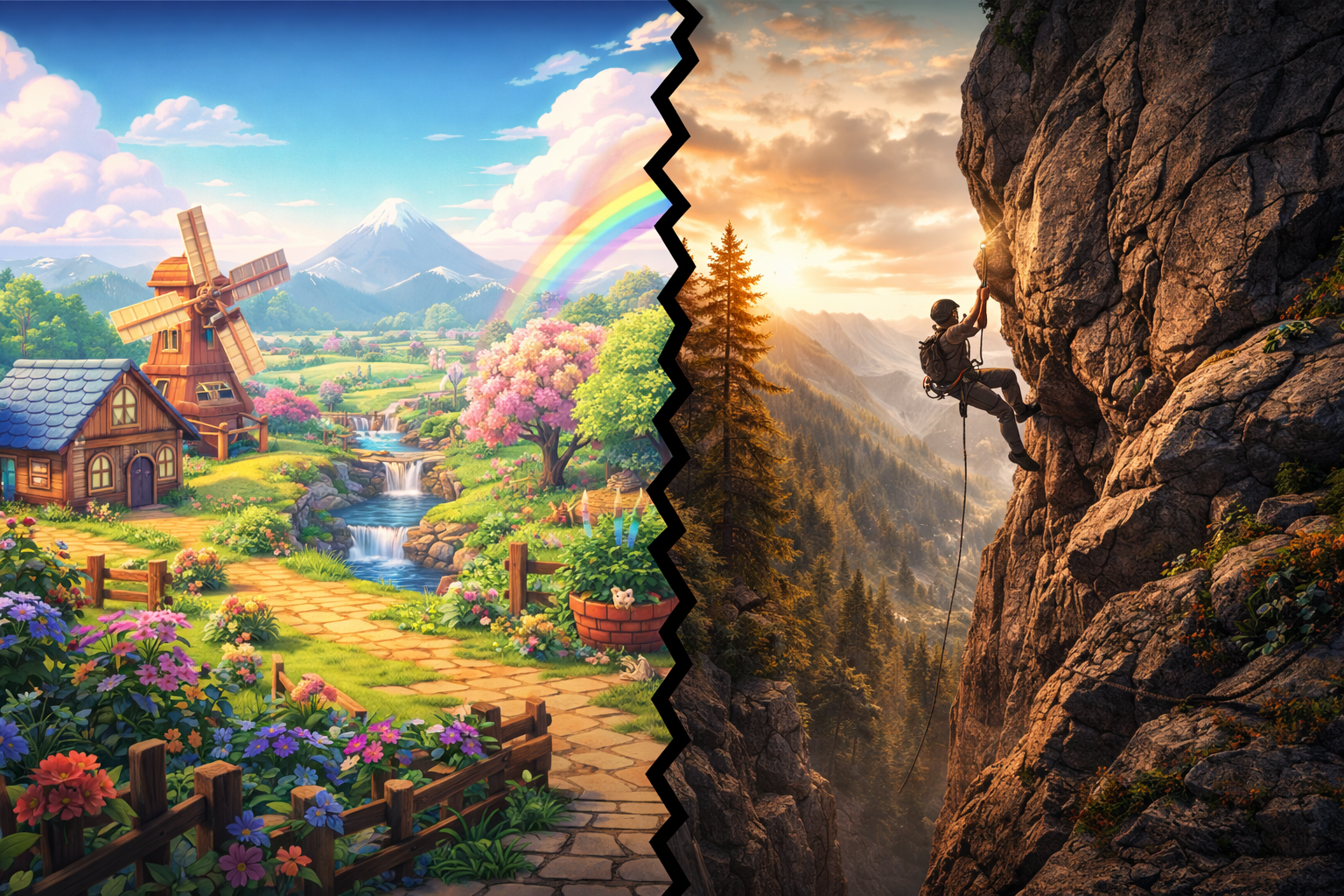
For a long time, cozy games followed a familiar formula.
Soft colors dominated the screen. Low stakes defined progression. Gentle loops created comfort.
However, 2026 is shifting that definition.
Across indie showcases and storefronts, a different kind of comfort is appearing. Instead of softness, it demands focus. Rather than ease, it rewards understanding.
As a result, hardcore realism is becoming the new cozy.
What the Indie Vertical Challenge Really Represents
The “vertical challenge” is not a genre label.
Instead, it describes a design direction.
In these games, difficulty builds upward rather than outward. Systems deepen instead of multiplying. Mastery replaces collection.
Because of that structure, progress feels earned rather than padded.
Why Realism Feels Comforting Right Now
At first, realism sounds stressful.
In reality, context changes everything.
Modern life is fragmented. Attention is constantly interrupted. Meanwhile, many games mirror that chaos with endless content and constant updates.
By contrast, hardcore realism offers stability.
Clear rules exist. Systems behave consistently. Effort leads to predictable outcomes. Therefore, players feel grounded instead of overwhelmed.
That grounding creates comfort.
Precision Has Taken the Place of Softness
Traditionally, cozy games soothed through visuals.
Now, many indie games soothe through precision.
For example:
- Movement feels deliberate
- Systems respond reliably
- Failure teaches instead of punishes
Because outcomes make sense, frustration becomes information. As a result, tension turns meditative instead of draining.
Why Indie Developers Are Driving This Shift
Small studios benefit from focus.
Unlike large teams, indie developers can design tightly scoped experiences. As a consequence, systems receive careful tuning. Additionally, mechanics remain readable.
Because realism rewards restraint, developers simulate one thing well instead of many things poorly.
That discipline creates depth.
The Cozy Nature of Mastery
Cozy does not always mean easy.
Often, cozy means familiar.
In hardcore-realist indie games, repetition builds comfort. Muscle memory forms over time. Systems become predictable through use.
Eventually, players enter a flow state. Because progress is earned, relaxation feels deserved.
Why Vertical Difficulty Beats Horizontal Expansion
Many games grow sideways.
More items appear. More systems stack. More content spreads attention thin.
However, vertical design moves differently. Difficulty rises upward. Skills compound. Knowledge stacks.
As a result, games feel complete without being large. That efficiency appeals to both developers and players.
Realism Without Punishment
Importantly, this trend is not about cruelty.
Hardcore realism in 2026 avoids cheap difficulty. Systems remain strict, yet fair. Feedback stays clear. Failure teaches instead of shaming.
Because of that balance, players feel respected. In turn, respect builds trust. Trust, therefore, creates comfort.
Why Players Call This the New Cozy
Player expectations have shifted.
Today, comfort often means:
- Predictable systems
- Honest difficulty
- No manipulation
- No endless grind
Hardcore realism delivers those qualities.
Instead of overstimulation, it offers clarity. Instead of noise, it provides focus.
What This Means for Indie Game Design
This shift changes priorities.
Visual softness becomes optional. Mechanical clarity becomes essential. Tutorials grow elegant. Systems remain transparent.
As a result, indie games feel confident in their demands. Surprisingly, that confidence feels safe.
The Cultural Moment Behind the Trend
This movement did not appear randomly.
Players are tired of being nudged, tracked, and optimized. Consequently, many seek experiences built on rules rather than algorithms.
Hardcore realism answers that desire. By doing less, these games offer more.
Final Thoughts
The 2026 indie vertical challenge is not about making games harder.
Instead, it is about making them honest.
Hardcore realism creates comfort through structure. It provides calm through clarity. It builds coziness through mastery.
In a noisy industry, that quiet confidence stands out.
And in 2026, it may be indie gaming’s most unexpected form of comfort.
